
Seasonal Pinterest content planning for POD shops
Seasonal Pinterest content planning for POD shops: a concrete approach to Pinterest content strategy for product sellers.
The real problem here
There is a recurring problem behind Pinterest content strategy: most sellers approach it the same way, get the same average results, and never work out why. "Seasonal Pinterest content planning for POD shops" exists because that problem is fixable — once you see it clearly.
Sellers who work around this problem successfully do one thing differently: they slow down at the exact point where most people speed up. That single habit changes the outcome more than any single tactic below.
Understanding how Pinterest works for sellers
Pinterest distributes content based on relevance, freshness, and engagement. The algorithm rewards keyword-optimized boards and pins, consistent daily pinning activity, high-quality vertical images in 2:3 ratio, and Rich Pins that pull live product data from your connected shop. Most sellers mistake Pinterest for Instagram — on Pinterest, follower counts matter far less than keyword discipline.
A step-by-step Pinterest content approach
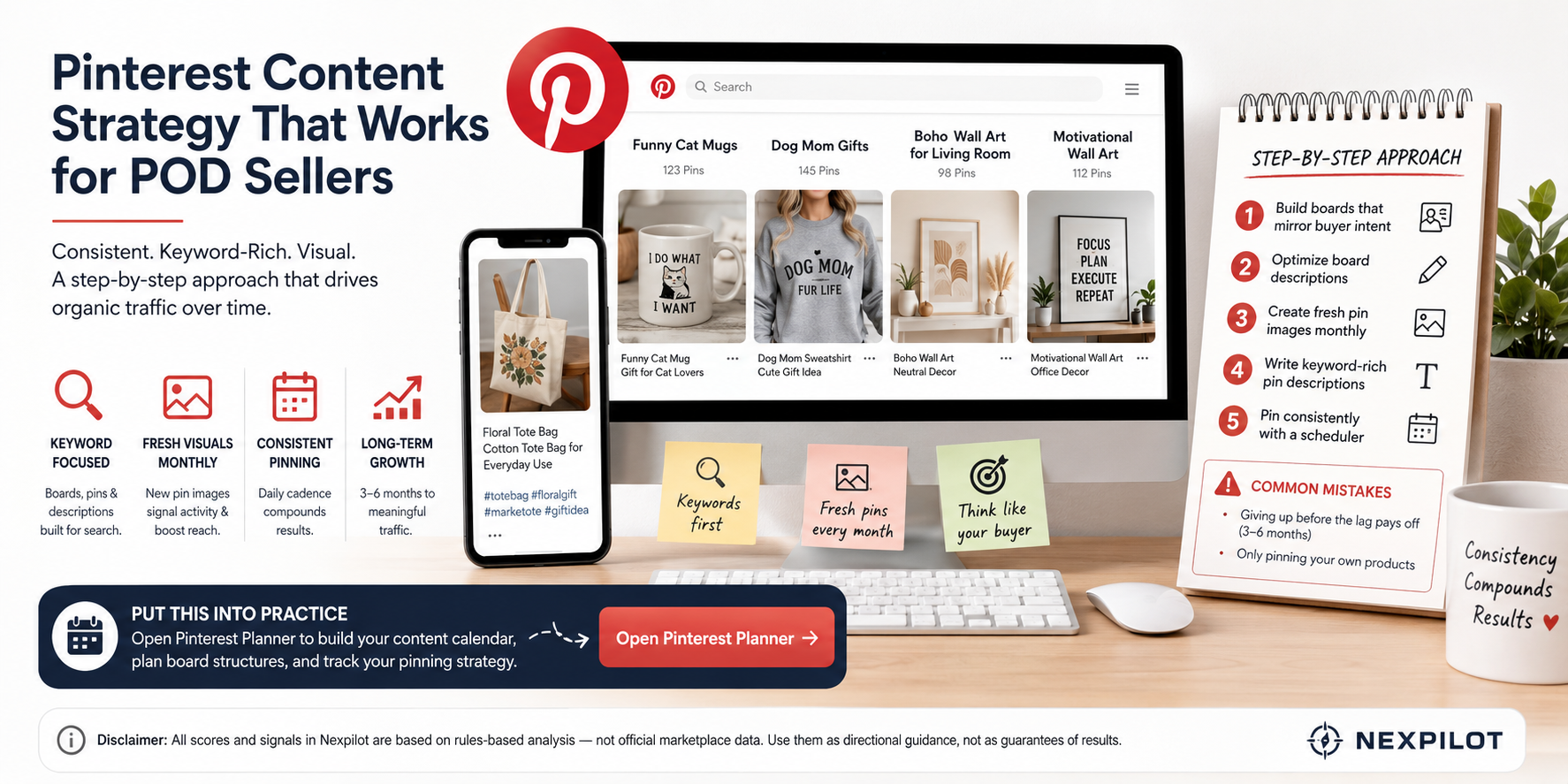
Step 1 — Build a board structure that mirrors buyer intent: Create one board per product category or theme, with names that reflect what buyers actually search. Instead of "My Products", create "Funny Cat Mugs", "Dog Mom Gifts", or "Boho Wall Art for Living Room". These are keyword-rich and discoverable.
Step 2 — Optimize board descriptions: Every board needs a 2-3 sentence description packed with natural keyword phrases. What would someone type into Pinterest to find these products? Include those phrases in the description.
Step 3 — Create fresh pin images monthly: Do not just repin old content. Create 2-4 fresh pin images per listing each month. Test different mockup backgrounds, overlay text styles, and color palettes. Fresh images signal activity and give the algorithm new content to distribute.
Step 4 — Write keyword-rich pin descriptions: Each pin needs a 100-150 word description. Include the product type, buyer persona signals, and a clear call to action. Add 3-5 relevant hashtags at the end — Pinterest penalizes hashtag overuse.
Step 5 — Pin consistently with a scheduler: Use Pinterest's own scheduler, Later, or Tailwind to maintain a daily pinning cadence even when you are not actively working on your shop. Consistency beats intensity.
Where sellers usually go wrong
Giving up before the lag pays off is the most common Pinterest mistake. It takes 3-6 months for a consistent strategy to show meaningful traffic results. Most sellers quit too early. Commit to one full quarter before judging results.
Only pinning your own products limits board authority. Repinning relevant content from other creators keeps your profile active. Aim for roughly 20-30% original product pins and 70-80% curated repins on most boards.
Bringing it together
One thing matters more than any single tactic here.
Pinterest rewards consistency and keyword discipline above all else. A small amount of structured daily effort — optimized boards, fresh pin images, keyword-rich descriptions — compounds over time into a significant organic traffic channel that requires no ad spend to maintain.
Put this into practice
Ready to put this into practice? Open Open Pinterest Planner to build your content calendar, plan board structures, and track your pinning strategy.
**Disclaimer:** All scores and signals in Nexpilot are based on rules-based analysis — not official marketplace data. Use them as directional guidance, not as guarantees of results.